Real Estate Agent Website: 9 Proven Features for Better Leads
A practical framework for building a property-focused website that supports trust, local discovery, useful browsing and clear enquiry paths.
Published: August 17, 2026
Explore the framework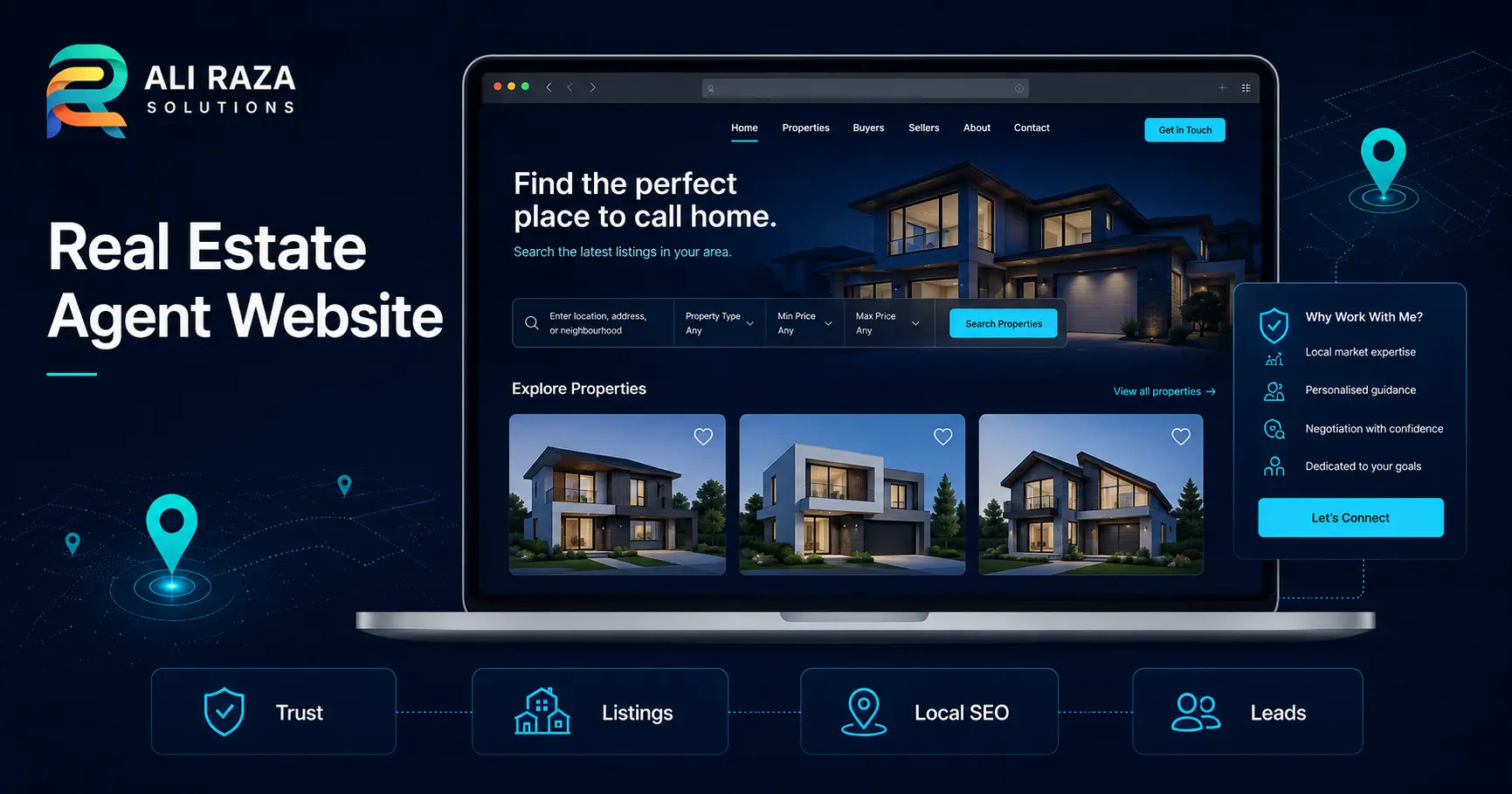
A real estate agent website should help a prospective client quickly understand who you serve, where you work, how to explore relevant properties or services, and what to do next. The strongest sites combine clear positioning, mobile usability, local search content, credible information and uncomplicated lead capture instead of treating the website as a digital business card.
Your exact setup will depend on your market, brokerage rules, property-data access and marketing model. The goal is not to copy a large property portal. It is to create an owned destination that connects your brand, local expertise, property journey and enquiry process.
What Makes a Real Estate Agent Website Effective?
An effective site reduces uncertainty. A visitor should not have to hunt for your service area, brokerage identity, property-search route or contact options. Navigation, page headings and calls to action should make those answers obvious.
The website also needs to work for more than one visitor type. A seller may want a valuation conversation, a buyer may want property information, a relocating family may need neighborhood guidance, and a referral may simply want to verify your experience and contact details. A useful real estate agent website gives each of those visitors a sensible path without overcrowding the homepage.
9 Proven Features for a Better Real Estate Agent Website
Clear positioning
State whether you help buyers, sellers, investors, landlords or a combination, and name the genuine areas you serve. The first screen should answer “who is this for?” before asking for a form submission.
Mobile-first experience
Property research often happens on a phone. Keep menus compact, buttons easy to tap, images appropriately sized and key information readable without zooming or horizontal scrolling.
Useful property discovery
Give visitors a clear route to available properties, curated collections or an approved search experience. Filters should reflect the data and options you can actually maintain.
Focused lead capture
Use calls to action that match intent: request a consultation, ask about a property, discuss selling, or request a valuation. Keep forms proportionate to the value of the next step.
Local search pages
Create useful pages for legitimate service areas rather than mass-producing thin location pages. Include the information a person considering that area would actually need.
Neighborhood content
Area guides can explain housing types, transport context, amenities, buying or selling considerations and links to reliable local resources. Keep time-sensitive facts reviewed and dated.
Trust information
Make the agent, brokerage relationship, contact details and relevant credentials easy to verify. Use only reviews, awards, transaction data or performance claims you are entitled to publish and can substantiate.
Marketing integrations
Connect forms to the CRM or follow-up process you actually use. Email, scheduling, analytics and property-data integrations should serve the journey rather than add unnecessary scripts.
Measurement and maintenance
Track meaningful actions such as property enquiries and consultation requests, then review forms, content, software updates, broken links and mobile behavior on an ongoing basis.
How a Real Estate Agent Website Supports Property Lead Generation
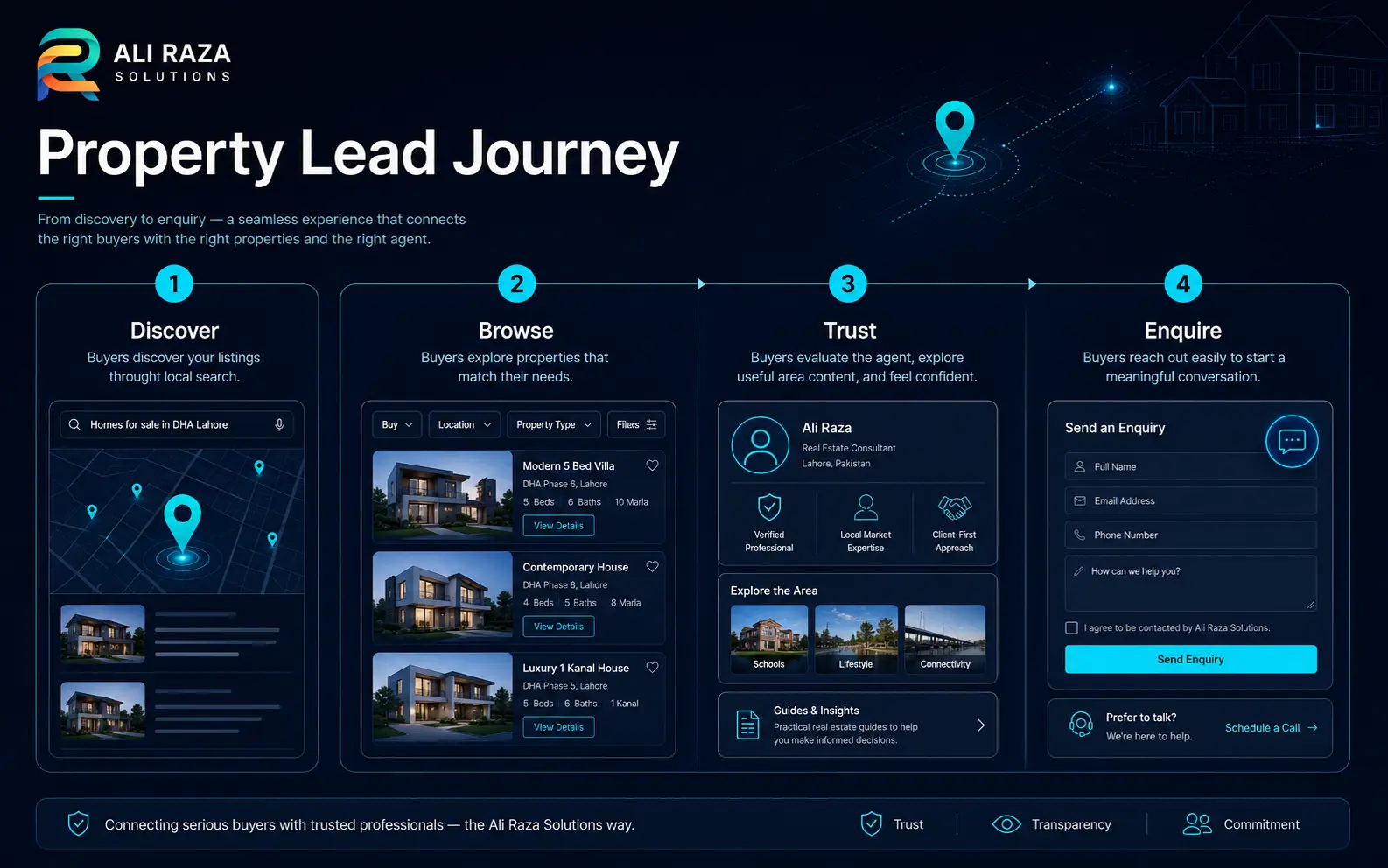
Lead generation works best as a sequence rather than a single button. A prospect may discover your business through a local search, referral, social profile or property link, browse relevant information, decide whether your expertise fits the situation, and only then make contact.
That is why every major page should have one clear primary action and a useful next step. A neighborhood article can lead to related properties or a consultation. A listing page can lead to a specific enquiry. A seller page can lead to a valuation conversation. This makes the real estate agent website part of the sales process without turning every paragraph into a pitch.
Match the CTA to the page
A buyer-oriented property page and a seller-oriented service page usually deserve different next steps. Keep the action specific enough that the visitor understands what happens after clicking.
Real Estate SEO and Local Visibility
A real estate agent website can support local discovery when its content clearly reflects the business, services and genuine locations served. Google’s SEO Starter Guide emphasizes creating sites for users while helping search engines understand and discover the content.
For an agent, that means descriptive page titles, logical internal links, crawlable text, useful area information, sensible image handling and a technically sound mobile experience. Google also documents LocalBusiness structured data for communicating business details, although structured data does not replace accurate visible information.
Build location depth, not doorway pages
If you serve several areas, give each important location a reason to have its own page. Cover the services offered there, links to relevant listings or resources, practical local context and a clear way to contact you. Avoid swapping city names into near-duplicate copy.
Ali Raza Solutions’ SEO services cover on-page, technical, local and content work. For a new real estate agent website, SEO decisions are easier to implement when page architecture and content planning happen before launch instead of after every template is already fixed.
Property Listings, IDX and MLS Integration
Not every site needs the same listing system. Some agents may need an approved IDX feed, some may publish only their own or brokerage-approved properties, and others may send visitors to an external search experience. The right decision depends on eligibility, local MLS rules, brokerage policy, data licensing, technical requirements and the experience you want visitors to have.
For U.S. practitioners using IDX, the National Association of REALTORS® explains that IDX policy allows MLS participants to authorize limited electronic display of listings by other participants. Its IDX policy sits within the broader MLS policy framework, and local implementation requirements still matter.
A Practical Real Estate Agent Website Page Framework
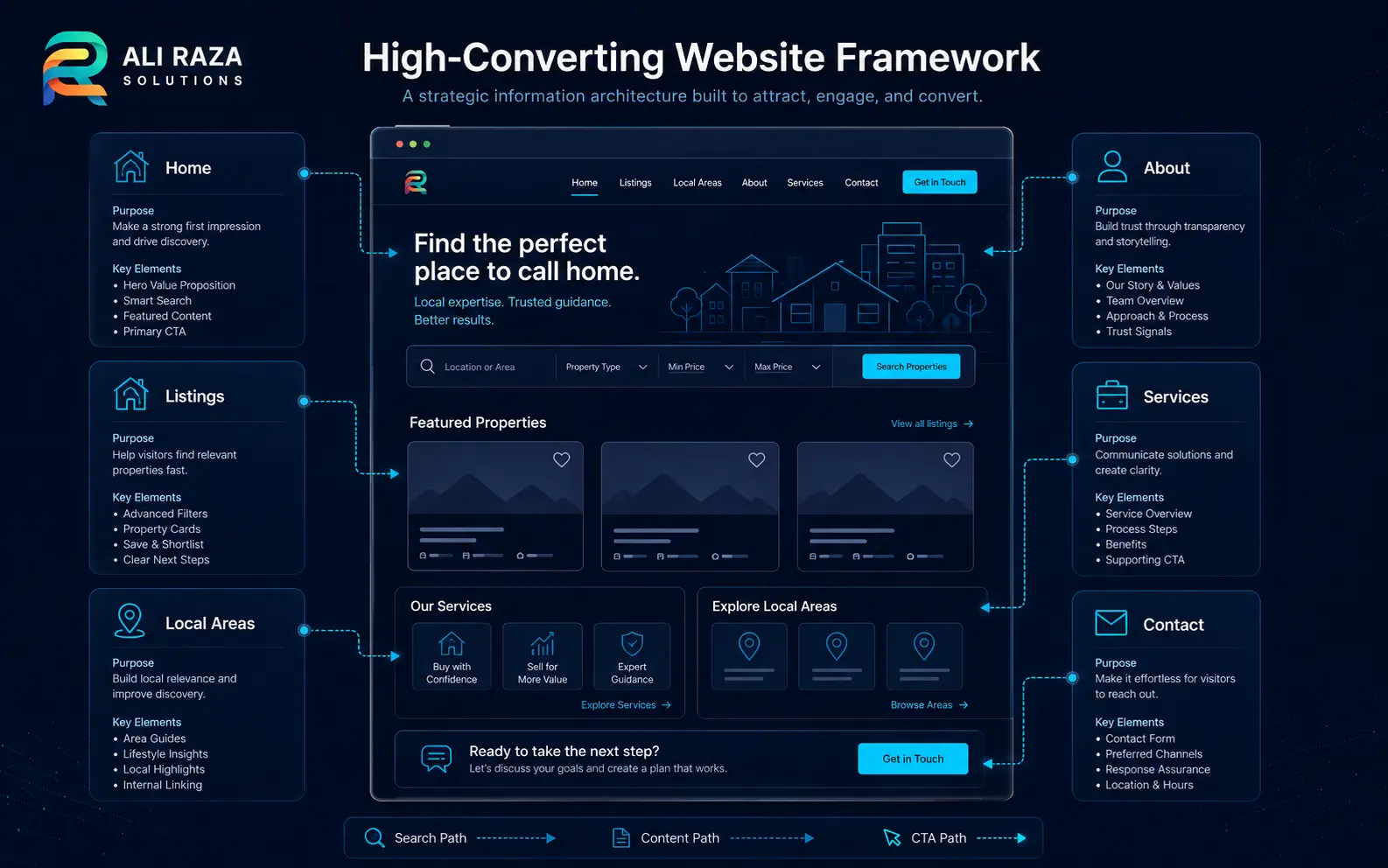
A compact real estate agent website does not need dozens of pages on day one. It needs the right pages connected in a way that helps visitors move between local information, services, property discovery and contact.
| Page | Primary job | Useful content |
|---|---|---|
| Home | Position the business | Service area, buyer/seller paths, featured property route, credibility and primary CTA. |
| Listings / Search | Support property discovery | Approved listings, search tools, filters and clear enquiry actions. |
| Local Areas | Answer location questions | Area guides, related services, useful resources and relevant property links. |
| Services | Explain how you help | Buyer, seller, investor or other genuine service pathways. |
| About | Build confidence | Agent background, brokerage context, approach and verifiable credentials. |
| Contact | Convert intent | Short form, phone/email options, service area and expectation for the next step. |
Why WordPress Can Fit a Real Estate Agent Website
WordPress can be a practical foundation when you want control over landing pages, local content, blogging, forms and integrations. WordPress.org describes the platform as flexible and extendable, with themes, plugins and developer resources available for custom implementations.
The platform choice alone does not make a website effective. Theme quality, plugin selection, hosting, security, performance, accessibility and maintenance all affect the result. A real estate agent website built on WordPress should use only the functionality required for the business and should avoid stacking overlapping plugins simply because they are available.
Ali Raza Solutions provides professional WordPress development for custom builds and site optimization. The development plan can be aligned with the page architecture, SEO requirements and integrations needed for a property-focused site.
What to Prioritize Before Launch
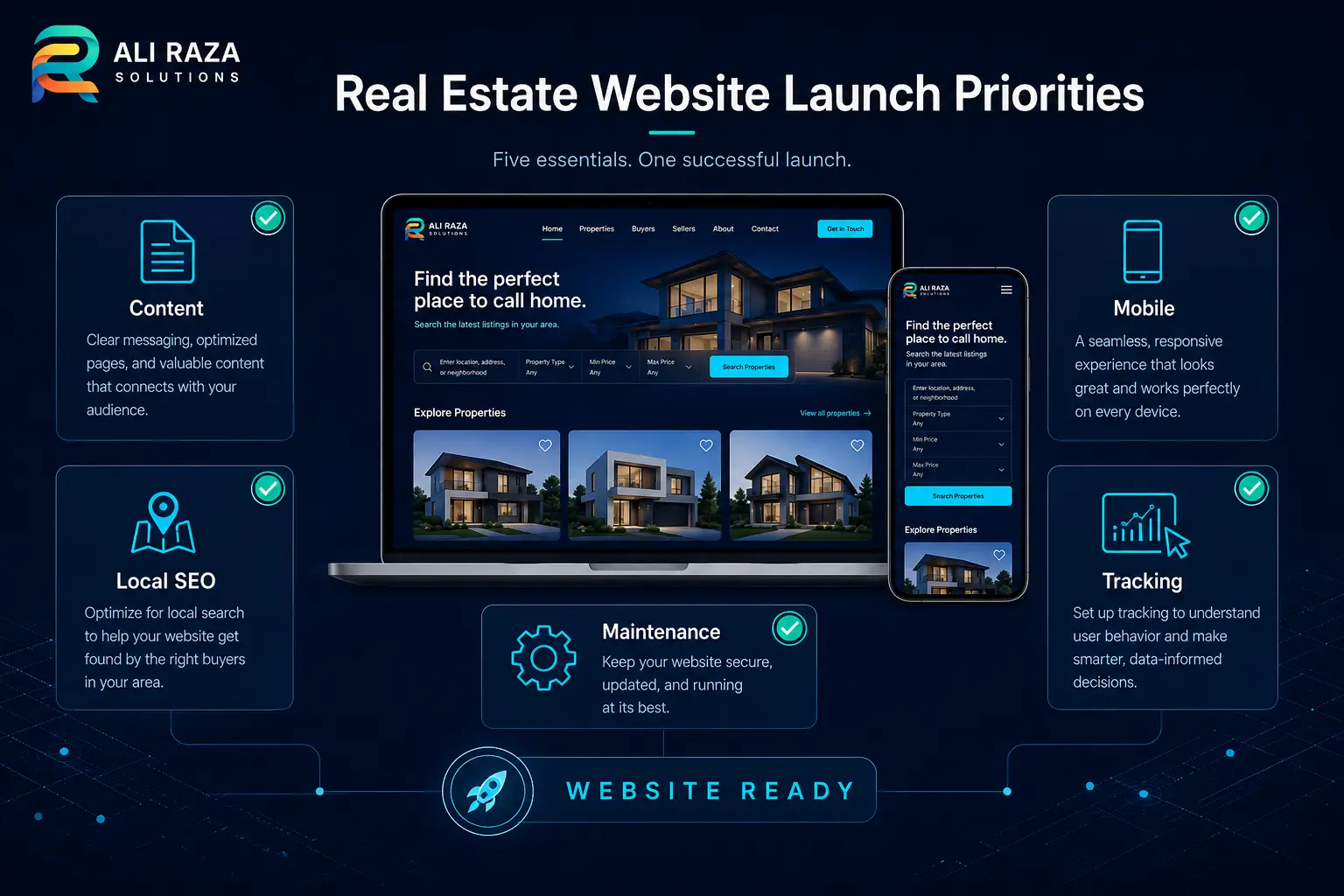
Before publishing a new real estate agent website, review the parts that directly affect usability and follow-up. Check every form on desktop and mobile, verify the destination of property links, proof service-area claims, compress media appropriately, test navigation, and confirm analytics or conversion events are recording the actions you intend to measure.
Also assign ownership for future updates. Property information, team details, local guides, legal disclosures and software components can become outdated. A launch checklist is useful only if it becomes a maintenance routine.
Content and compliance
Confirm names, contact details, brokerage information, service areas, listings, disclosures and claims are current and approved for publication.
Mobile and performance
Check tap targets, forms, image loading, menus, search tools and key pages on real devices and common viewport sizes.
Search foundation
Review titles, headings, indexability, canonical URLs, internal links, structured data and useful location content before launch.
Tracking and follow-up
Confirm each enquiry reaches the correct inbox or CRM and that measurement reflects meaningful actions rather than page views alone.
Frequently Asked Questions
What should a real estate agent website include?
A real estate agent website should make the agent or brokerage clear, explain the service area, present properties or property-search options, provide useful local content, show appropriate trust information, and give visitors simple ways to enquire. It should also work well on mobile and have a maintainable SEO and analytics foundation.
Does a real estate agent need a personal website?
A personal website is not mandatory for every agent, but it can give an agent more control over branding, service-area content, lead capture, and long-term search visibility than relying only on third-party profiles. Brokerage rules and local advertising requirements still apply.
How does a real estate agent website generate leads?
It can generate leads by helping people discover the business through search or referrals, giving them useful property and local information, building confidence, and offering clear next steps such as a consultation, valuation request, property enquiry, or saved-search registration.
Is WordPress suitable for real estate agents?
WordPress can be a practical choice when an agent needs flexible page creation, blogging, SEO controls, integrations, and ongoing content updates. The right theme, plugins, hosting, security, and maintenance process still matter.
Does a real estate website need IDX or MLS integration?
Not always. In the United States, IDX can be useful when eligible MLS participants want to display permitted listing data on their own website, but implementation and display rules depend on the applicable MLS and brokerage requirements. Some agents may instead use curated listings, external search links, or another approved property-data solution.
How can local SEO help real estate agents?
Local SEO can help search engines and prospective clients understand the locations an agent serves. Useful area pages, accurate business information, relevant internal links, technically sound pages, and genuinely helpful local content can support discovery without relying on repetitive location-keyword pages.

About Ali Raza Solutions
Ali Raza Solutions provides WordPress development, SEO and digital services for businesses in the United States and United Kingdom.